SCROLL DOWN FOR HELPFUL INFO ON
HOW TO WRITE A LETTER TO LUIGI MANGIONE
Luigi Mangione
How This Began
Like most Americans and global spectators, I watched the news the week of December 04, 2024, as authorities searched for a suspect in connection to UnitedHealthCare CEO Brian Thompson’s death by shooting. I watched out of curiosity and to bear witness to the realization that we all saw the same truth. Then, on December 09, 2024, Luigi Mangione was arrested as the suspect.
I recognized something in it immediately: the pattern, the pressure, the collapse of a human being inside a system designed to fail him. A person pushed past the threshold by the same forces hurting all of us (Luigi Mangione remains innocent until proven guilty, and whether or not he is the suspect responsible for Thompson’s death is separate fromt he reality that someone pulled that trigger, and whomever that person was is the context that I’m speaking to).
That same day, I posted a video on TikTok asking people to write Mangione letters. I shared guidelines, the way I wish someone had done for the people who wrote to me in prison. I knew what a letter can mean when every part of my life had been stripped away, how a few handwritten lines can remind a person that they are still human, still valued, still reachable.
I didn’t plan a movement; I didn’t even call it that. I just knew what it felt like to be alone in a cell while the world made up stories about me.
From there, everything grew.
I kept speaking about his case, what it revealed about mental health, about despair, about the impossible pressures placed on people inside a collapsing healthcare system. I spoke with journalists. I answered questions that no one else wanted to ask. I kept telling the truth out loud: that Luigi’s alleged actions were not an isolated incident, but a canary-in-the-coal-mine warning about what happens when profit becomes more sacred than human life.
I used my platform to push for universal healthcare, not as an abstract policy position, but as a matter of survival. I told the story the system didn’t want told: that the real crisis isn’t one man’s breaking point, but a healthcare industry that has already broken millions.
I never claimed to be Luigi’s spokesperson.
I’m simply someone who has lived inside systems that collapse onto the people they’re supposed to protect, and I refuse to look away when it happens again.
Everything I’ve done since that day has been rooted in one belief:
No one should be abandoned at their lowest point, not by their community, not by their country, not by the systems built to keep us alive.
I am not affiliated with Luigi Mangione directly. I do not know him personally, nor have I ever met him. I have been an official spokesperson for groups and organizations that align with my work. For the most up-to-date information on Luigi Mangione’s ongoing case proceedings, you can go to the Luigi Mangione Legal Defense Information page.
How to Write a Letter to Luigi Mangione
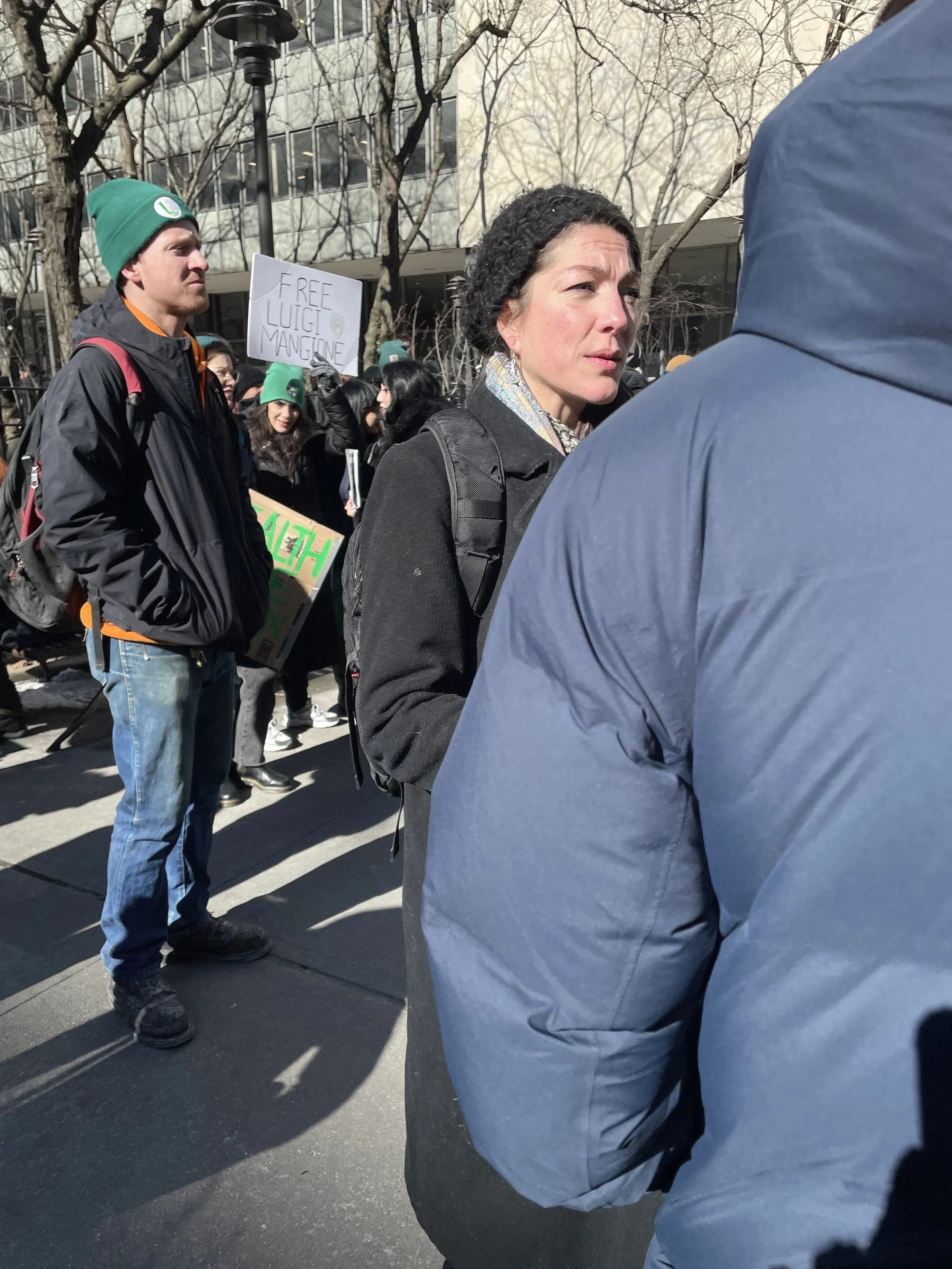
Luigi Nicholas Mangione, #52503-511
MDC Brooklyn
Metropolitan Detention Center
P.O. Box 329002
Brooklyn, NY 11233
LEGAL DISCLAIMER:
Writing a Letter to a Person Who Is Incarcerated Is Legal
It is completely legal for any member of the public to write to an incarcerated person in the United States.
This right is protected by the First Amendment of the U.S. Constitution, and nothing about sending a letter or commissary deposit to an inmate constitutes a crime, a security threat, or an action that places someone on any kind of “watch list.”
1. Federal Law Protects Your Right to Correspond: Under 28 C.F.R. §§ 540.2–540.21 (Federal Bureau of Prisons regulations), people in federal custody are explicitly permitted to receive correspondence from the public. These regulations define mail as a constitutionally protected communication and place no restrictions on who may write to an inmate.
2. No Law Prohibits Contact With a Pretrial Detainee: Luigi Mangione is a pretrial detainee. There is no federal or state law that prohibits anyone from sending him a letter. The only restrictions apply to the inmate, not the public (e.g., mail may be screened for contraband).
3. You Do NOT Get Placed on Any Federal List: There is no federal, state, or private database that tracks or penalizes people for sending letters to an incarcerated individual. You are not added to a watch list. You are not placed under surveillance for writing to an inmate. Your travel, passport, or immigration status is not impacted. Your name is not shared with law enforcement beyond normal mail-room handling. There is simply no mechanism in U.S. law that creates consequences for writing an incarcerated person.
4. It Does NOT Affect Your Ability to Fly or Travel: The TSA, DHS, and State Department do not track or regulate communication with incarcerated people. Writing to an inmate is not relevant to TSA Secure Flight Screening, REAL ID, passport issuance, international travel, visas, or global entry / TSA PreCheck eligibility.
5. You Are Not Aiding or Abetting Anything: Writing a letter is not “supporting criminal activity,” “interference,” or “obstruction.”
Under 18 U.S.C. § 3 and § 4 (accessory and misprision statutes), communication alone, including moral support, empathy, or commentary, does not constitute a crime. You are not aiding, abetting, or conspiring by writing a letter.
6. Writing Letters to Inmates Is Normal, Common, and Encouraged: Human contact is considered beneficial to rehabilitation. The Federal Bureau of Prisons explicitly states that correspondence helps maintain “community ties,” which reduces recidivism.
Summary: Your Rights Are Clear: Writing to Luigi Mangione, or to any other person who’s incarcerated is fully legal, constitutionally protected, not monitored as suspicious, not tracked by federal agencies, not a risk to travel or legal status, and not a crime. You are legally and morally free to write.
GUIDELINES FOR WRITING SOMEONE WHO IS IN A DETENTION FACILITY:
Inmate mail is screened and will be rejected for profane, explicit, or crime-related content.
PAPER: Limit your letter to three (3) pages, either typed or hand-written on plain paper. Paper can be lined, notebook, or printer. Avoid specialty, metallic, and craft paper. Single sided is recomended.
ENVELO0PE: Use a plain, white envelope. Do not use cute or legal envelopes.
INK: Do NOT use markers, paint, gel/glitter pens, or anything fun. Seriously, stick to a black or blue pen, pencil, or printer ink. Colored pencils are fine.
Do NOT add stickers, glitter, glue, perfume, cologne, or lipstick.
You CAN include crossword or other one-page puzzles (sodoku, etc); be sure to include an answer key.
You can send photos; limit to 2-3.
You can NOT send magazines, publications, etc. You can NOT send care packages.
If you write about anything connected to any alleged or real crime, your letter will be rejected.
BASED ON MY EXPERIENCE:
The jokes about being an inmate got old really quick. What I loved most when I got letters was when people were willing to engage in conversation with me. That is, ask questions about my opinion on something. It felt human. I loved hearing about news that was not at all related to my life, like cool science news or poetry that’s causing a stir. More than anything, I love when people opened up to me and were willing to share their fears, their dreams, and their innermost thoughts. Don’t overthink it. Write from the heart.
What I Believe
I believe all human beings are sacred, born with intrinsic dignity and worth that cannot be taken away, not by a courtroom, not by a corporation, not by a headline. All of us. Especially trans people, whose humanity is under relentless attack because of other people’s insecurities and fear.
I believe the systems we live under have been corrupted into a kleptocracy, a government captured by billionaires, insurance giants, and corporate interests who profit from our illness, our exhaustion, and our fear. We are being robbed of rights that should be given freely: healthcare, safety, stability, dignity.
I believe the alleged actions of Luigi Mangione and the death of Brian Thompson are not isolated tragedies, but a warning: a canary in the coalmine. When healthcare becomes a commodity, when suffering becomes a revenue stream, when corporations prioritize shareholders over human life, people break. Systems break. Communities break.
I believe it is absurd, morally, politically, and spiritually, that Americans must pay to stay alive. Healthcare is not a luxury. It is not a product. It is a human right, and the government should provide it without cost, because a government of the people, by the people, for the people should serve humanity, not profit.
I believe UnitedHealthcare and corporations like it should be held accountable for the harm they cause, the care they deny, and the lives they quietly erase. The lawsuits stacking up against them are not accidents or anomalies, they are evidence of a system that has chosen profit over people.
And I believe that telling the truth about all of this is not radical.
It is human.
It is moral.
It is necessary.
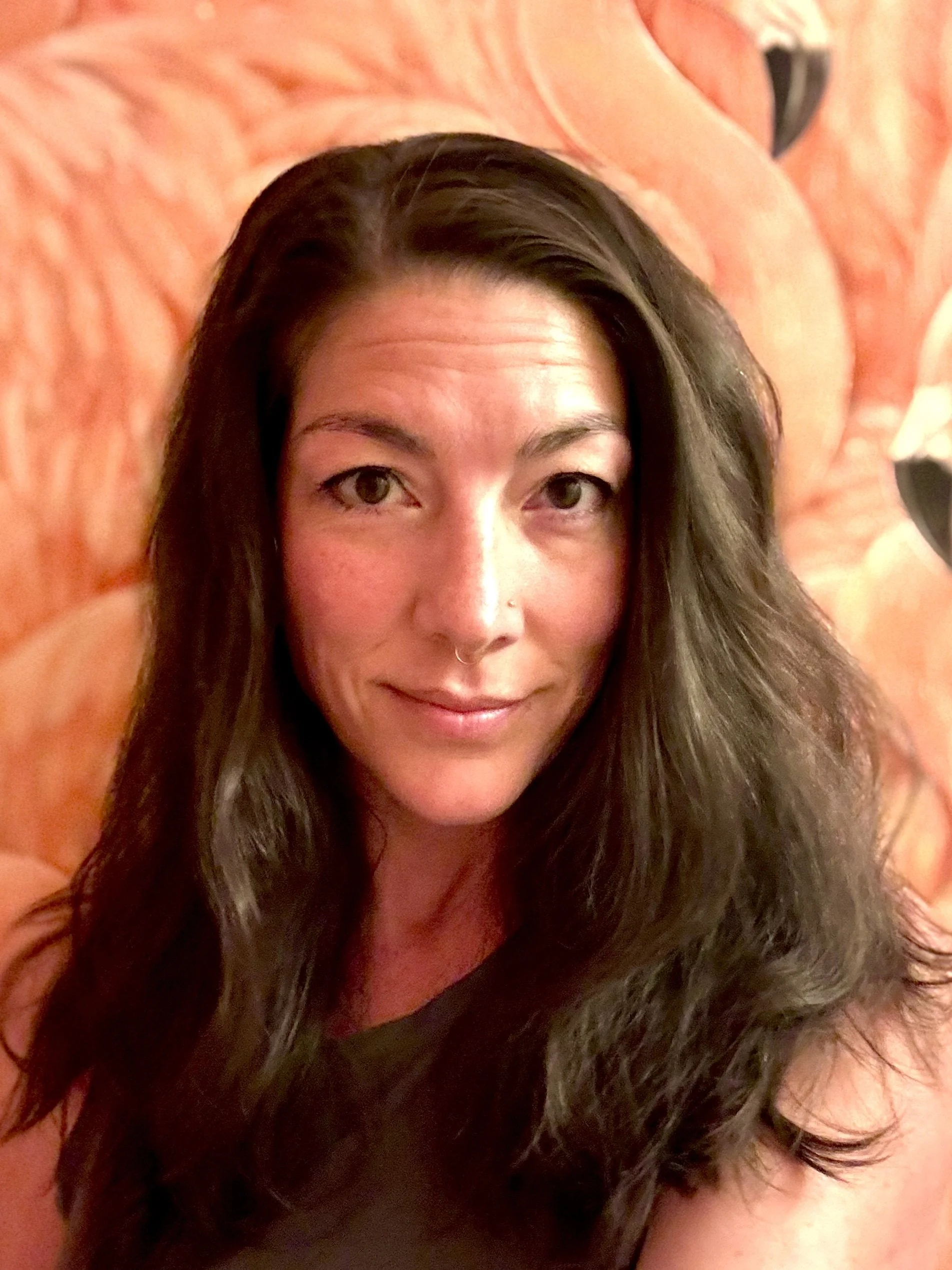
How Corporate Media Tries to Contain Truth
The mainstream coverage below does not reflect the conversations I had in interviewswhere I spoke about accountability instead of punishment, and about Brian Thompson’s death as a symptom of systemic cruelty, not an isolated cause.
On Line to See Luigi Mangione (Intelligencer)
New York Magazine described a crowd of young supporters lining up to see Mangione, some carrying memes, merch, and celebrity-style energy, and quoted me as the “lead organizer outside the courthouse.” But the piece treats the phenomenon as spectacle rather than as a signal of systemic collapse: it lingers on “fangirl” tropes and court-day theater instead of naming the industry, corporate greed, and human despair that fuel the support.
Controversy in the US: Luigi Mangione, accused of murdering the CEO of UnitedHealthcare, received dozens of letters and money from his supporters in jail (Infobae).
It reports that while incarcerated, Luigi Mangione received 54 emails, 87 physical letters and dozens of commissary deposits from supporters, a wave of solidarity that media outlets described as fanfare.
But what the article treats as “support for the accused” was never about fandom: it was a response to systemic violence, a protest against a healthcare industry that destroys lives, and a refusal to let the story be sold as clickbait.
What Luigi Mangione supporters want you to know (according to CNN)
CNN covered the growing movement around Luigi Mangione, noting the national momentum behind his supporters, including my work, while still framing the story through the safe, mainstream narrative that keeps the focus on public reaction instead of the collapsing healthcare system that produced this crisis. My advocacy was acknowledged, but the article stopped short of naming the real culprit: a for-profit industry harming millions while the media sidelines anyone who tells the truth about it.
Lindsy Floyd, People Over Profit NYC Messaging Facilitator, said outside the courthouse where Luigi Mangione is facing murder charges, that the real people wh…(NewsWeek video clip).
The video shows me, as a messaging facilitator and public advocate, standing outside the courthouse, speaking truth about what Luigi Mangione’s case really reveals: a broken system and collapsing healthcare industry, not some sensational “fan-club.” The footage exposes how quickly the press tries to reduce human desperation into spectacle rather than engage with the structural injustice behind it.
The chicks who dig Luigi Mangione (The New Statesmen)
This piece traffics in the same spectacle as tabloid media, painting his supporters (including me) as star-struck fans swooning over a mug-shot rather than naming the real outrage: a healthcare system that kills people by design. In their rush to mock, they erase why people are reaching out for justice, not celebrity.
The long wait for a glimpse of Luigi (The Verge)
They covered Mangione’s February pretrial hearing, showing a courthouse turned spectacle, livestreamers, tents on the sidewalk, and fans treated like fans. But the article frames the scene as viral drama rather than acknowledging what we know: this support isn’t about fandom. It’s a protest: a signal of outrage at a healthcare system built on denial, profit, and human suffering.
At the Courthouse with Luigi Mangione’s ‘Fangirls’ (TheCut)
Their story about women showing up outside court to support Luigi Mangione, including me, reduced a protest against healthcare injustice to a pop-culture spectacle. The piece treats solidarity as a sideshow instead of confronting the systemic collapse behind the outrage.
UnitedHealthcare CEO Killer Suspect Luigi Mangione Pleads Not Guilty (Newsweek)
Newsweek covered the court appearance of Mangione, noting his “not guilty” plea, the crowd of mostly young women in the courtroom gallery, and the surge of mail and commissary money sent to him.
But in framing that as attraction and spectacle: romantic letters, fan-mail mood, courtroom drama. The article ignores what really drove people to him: anger, despair, and outrage over a health-care system killing people by design.
Spending time with Luigi Mangione’s super supporters (CosmoUK)
The piece reduces supporters, including me, to a lifestyle trend: “women swoon, send letters,” reactionary fandom masquerading as sympathy. It turns real outrage at a broken health-care system into tabloid theatre, masking the systemic violence that actually caused the moment people began reaching out.
The New York Post Joked About It.
The NY Post tried to paint Luigi’s supporters, including me, as “besotted groupies,” turning systemic healthcare collapse into a tabloid caricature instead of confronting the billion-dollar greed that created this crisis.
DISCLAIMER: I do not support, encourage, or condone violence of any kind; not interpersonal, not political, not institutional. I reject harm as a tool for change. I do not promote retaliation, vigilantism, or any action that causes physical danger to any person or group. Nothing on this website, in my content, or in my advocacy should be interpreted as a call to violence or unlawful behavior. At the same time, naming violence is not the same as endorsing it. History, psychology, and lived experience all show that when systems harm people: when governments, corporations, or institutions use violence, exploitation, or neglect, it is not surprising that people respond with fear, rage, or desperation. Describing those dynamics is not an endorsement; it is an observation about the world we currently live in, and a warning about the human consequences of systemic cruelty. Accountability requires clarity, not silence. Calling attention to injustice, structural harm, or the conditions that produce reactive violence is not the same as supporting it. My work is grounded in prevention, dignity, and the belief that all lives, including the lives of those who struggle, those who break, and those who are accused, have worth. I believe in nonviolence as a practice and in justice as a physical law, not as a weapon. My advocacy is aimed at creating a world where violence is unnecessary because human beings have access to safety, care, and dignity, and where the systems holding power are accountable for the harm they cause.